|
Brain DevelopmentTopics
The Effect of Stress on the Human BrainBeing under stress can induce many negative effects on a person's academic performance. Although there are many forms of stress, the two main types in which most students are affected by are those that induce an emotional and mental physiological strain. Human stress has always been an accompaniment to life and has been documented numerous times in the past. In fact, nearly 2000 years ago, ancient Greek physicians noted that most people suffering from stress were more likely than others to develop cancer. Although these observations are far outdated, they still hold some form of truth, since stress almost always contributes to symptoms associated with a particular problem. A teacher knowledgeable in this field of study will agree that building a stress-free classroom environment will ensure a brain-friendly setting and enhance learning so that all students can reach their learning goals.
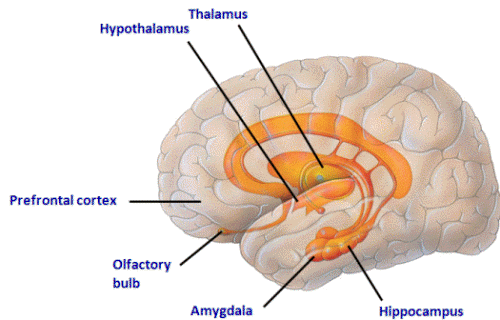
Figure 1. The Scream (1893) by Edvard Munch. This painting depicts an agonized figure overwhelmed by: stress? Anxiety? Or perhaps both. During a time of stress, the adrenal cortex (the outer portion of the adrenal gland) releases one of many hormones called cortisol. Cortisol is a regulatory hormone involved in proper glucose metabolism, regulation of blood pressure, and insulin release for blood sugar maintenance (Campbell & Reece, 2005). When a person experiences an enormous amount of stress over a long period of time, the adrenal cortex continues to release large quantities of cortisol. Cortisol moves its way into the brain and inhibits glucose transport and metabolism of several brain regions, including the hippocampus (Horner et al., 1990). As part of the limbic system (Figure 2), the hippocampus is associated with emotion and homeostasis, and plays a major role in regulating the secretion of cortisol via feedback (Krey et al., 1986). Without an energy source to the hippocampus, cortisol is continually produced and the brain's overall functionality slows down, including ones normal memory function and state of mind. This semi-sequential process is outlined in detailed below. Furthermore, stress also impairs a person's immune response. In one study, immune function in college students were examined just after a vacation and again during final exams. Their immune systems were impaired in various ways during exam week; for example, interferon (proteins involved in immune response) levels were lower (Campbell & Reece, 2005).
Figure 2. The limbic system. A ring of structures around the brainstem. It is important to note that all students vary in sensitivity to an environmental stimuli. That is, each student has their own unique sensitivity meter to a potential stressor, such as odors, sounds, as well the teacher's emotional state. Therefore, a teacher should not assume that their maximum stress level is the same as their students. Some people can work in a loud environment and not lose concentration; while others may find it distracting, even to a point where they stop what they are doing until the stimuli is alleviated. In a test situation, this may be stressful for students who prefer a quiet classroom to think clearly. If a teacher pays little attention to the class during a test, students under stress may not be able to recollect any memories to successfully complete their test. Anxiety levels may also cause students to panic, worry, or "go blank." When possible, an educator should eliminate any unnecessary distractions caused by lighting, noise, temperature, and uncomfortable chairs, so that students may feel less distracted and more relaxed in their learning experience at school. If the teacher is having a bad day, they must try to avoid expressing their emotions in class and taking it out on their students. This situation can increase the emotional climate of the classroom and have a strong impact on every students' stress level, especially when they are in need of help but do not feel comfortable enough to approach their teacher. A further major cause of stress, most notably social stress, for most teenagers is bullying. When a person is bullied, survival becomes a higher priority than anything else on the student's mind. As a result, students who are bullied usually become less attentive in class, loss concentration, and give-up quite easily. An educator who understands the effects of stress on the brain will responsibly analyze the cause of the problem and provide objective solutions for the student to consider when in conflict. The human brain is an incredible bodily instrument capable of regulating a myriad of functions. An educator who appreciates how the brain functions will have an even greater appreciation playing a part in developing the young minds of tomorrow.
|